
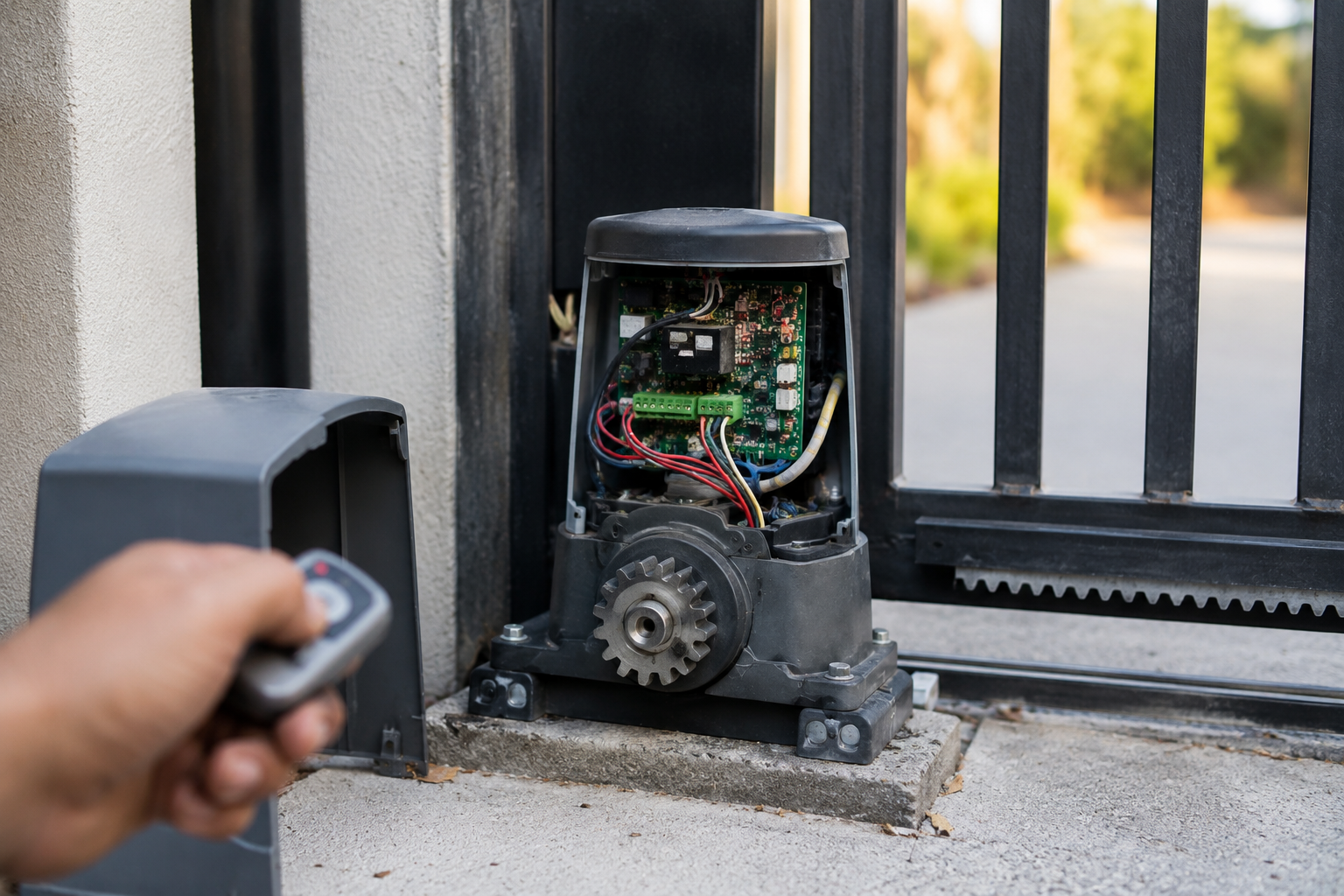
A gate motor that suddenly refuses to open is one of the most frustrating problems homeowners deal with. It usually happens at the worst possible time, when you’re trying to leave for work, arrive home late, or secure your property.
Because gate motors are used daily, it’s easy to assume that when something goes wrong, the entire system has failed. In reality, most gate motor issues come down to one specific problem rather than a complete breakdown.
Understanding what to check first can save you time, money, and unnecessary stress.
If your gate motor is not opening and you need help figuring out the issue, Cape Fencing & Steel can inspect the system and get it working again.
Get Your Gate Motor Fixed
Fill in the form and we will come to inspect your gate motor for repair.
The Most Common Reasons a Gate Motor Stops Opening
Gate motors rely on a combination of electrical power, signal input, and mechanical movement. When one of these is affected, the system stops working as expected.
The most common causes include:
- A flat or worn-out battery, especially during load shedding
- No power supply or a tripped breaker
- Remote or signal failure, where the motor isn’t receiving commands
- Obstructions on the track, such as stones or debris
- Gate misalignment or worn rollers, causing resistance
- Internal motor or control board faults
In many homes, the battery is the first place to look. Batteries don’t last forever, and with frequent power cuts, they tend to wear out much faster than most people expect.
Why the Battery Is Often the Problem
Many homeowners don’t realise that a gate motor does not run directly on mains electricity when operating. The system relies on a battery, which is kept charged while power is available.
When the power goes off, the battery takes over completely.
If the battery is weak or failing, the gate motor may stop opening even when electricity has returned. You might notice the gate opening slowly, stopping halfway, or not responding at all.
In most South African conditions, especially with regular load shedding, batteries are one of the first components to fail. Replacing the battery is often enough to restore normal operation.
How Load Shedding Affects Gate Motor Performance
Load shedding has changed how gate motors perform over time. Instead of occasional use, batteries are now constantly being drained and recharged, often without enough time to fully recover.
This leads to gradual performance issues.
You may notice:
- The gate working when power is on, but failing during outages
- Fewer opening and closing cycles before the system stops
- Slower or weaker movement
- The motor stopping halfway through operation
These symptoms are often mistaken for motor failure, but in many cases, they point directly to battery or charging issues.
Mechanical Issues That Can Stop the Gate
If the electrical side seems fine, the next thing to check is the gate itself.
A gate motor is designed to move a gate that is properly aligned and runs smoothly. If the gate becomes difficult to move, the motor will either struggle or stop completely.
Common mechanical issues include dirt or debris on the track, rust buildup, worn rollers, or a gate that has shifted out of alignment over time.
A simple test is to disengage the motor and move the gate manually. If it feels heavy, stiff, or uneven, the problem is likely mechanical rather than electrical.
When It Might Be the Motor Itself
If you’ve checked the battery, power supply, and gate movement, and everything seems normal, the issue could be internal.
Signs of a motor-related problem include the motor making noise without moving the gate, inconsistent behaviour, or unusual sounds such as grinding or clicking.
These issues are more common in older motors or systems that have been under strain for long periods. In these cases, a proper inspection is needed to determine whether repair or replacement is the better option.
What You Should Check Before Calling a Technician
Before calling for assistance, it helps to run through a few basic checks.
- Check that the motor has power
- Test the remote and replace its batteries
- Consider how old the battery is
- Inspect the track for obstructions
- Try moving the gate manually
These simple steps can often point you in the right direction and help determine whether the issue is minor or requires professional attention.
If the problem is not obvious or keeps coming back, it’s best to have the system properly assessed before it leads to further damage.
Book a Gate Motor Inspection
Fill in the form and we will come to inspect your gate motor for repair.
Conclusion
A gate motor that is not opening is usually a sign that something within the system needs attention, not that the entire motor has failed.
In most cases, the issue comes down to battery condition, power supply, or resistance in the gate itself. These are all problems that can be identified and resolved with the right approach.
Understanding what to check first helps you avoid unnecessary repairs and ensures your system is fixed properly.